One record per course
Keep the title, period, description, subject, objectives, materials, evidence, status, and approval together.
High-school course records with evidence
A course description explains what the learner studied, which resources and methods were used, and how the recorded result was supported. Storianna keeps that description attached to the course evidence instead of rebuilding it later.
Start free. No credit card required.
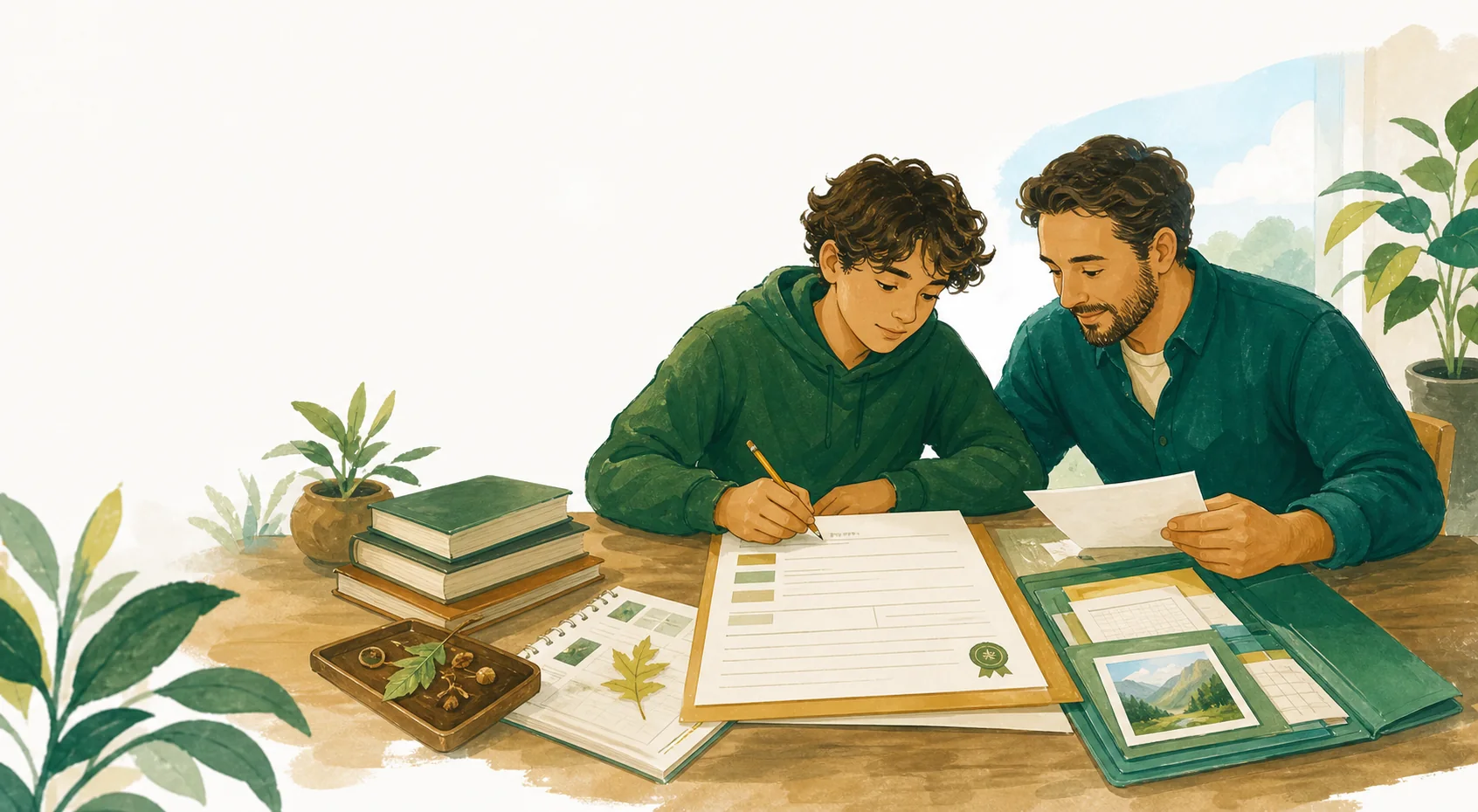
Custom, interest-led, co-op, online, dual-enrollment, and project-based courses rarely fit neatly into a catalog sentence. A reliable description starts with the actual course record: scope, major topics, resources, learning methods, representative work, assessment approach, and the adult-approved credit or grade decision.
Keep the title, period, description, subject, objectives, materials, evidence, status, and approval together.
Describe independent study, co-op classes, projects, practical work, online instruction, tutoring, or mixed approaches accurately.
Connect books, plans, projects, assessments, and completed learning before approving a grade or credit.
Keep course titles, periods, grades, credits, and saved descriptions aligned across the family records you choose to keep.
Connected course-record workflow
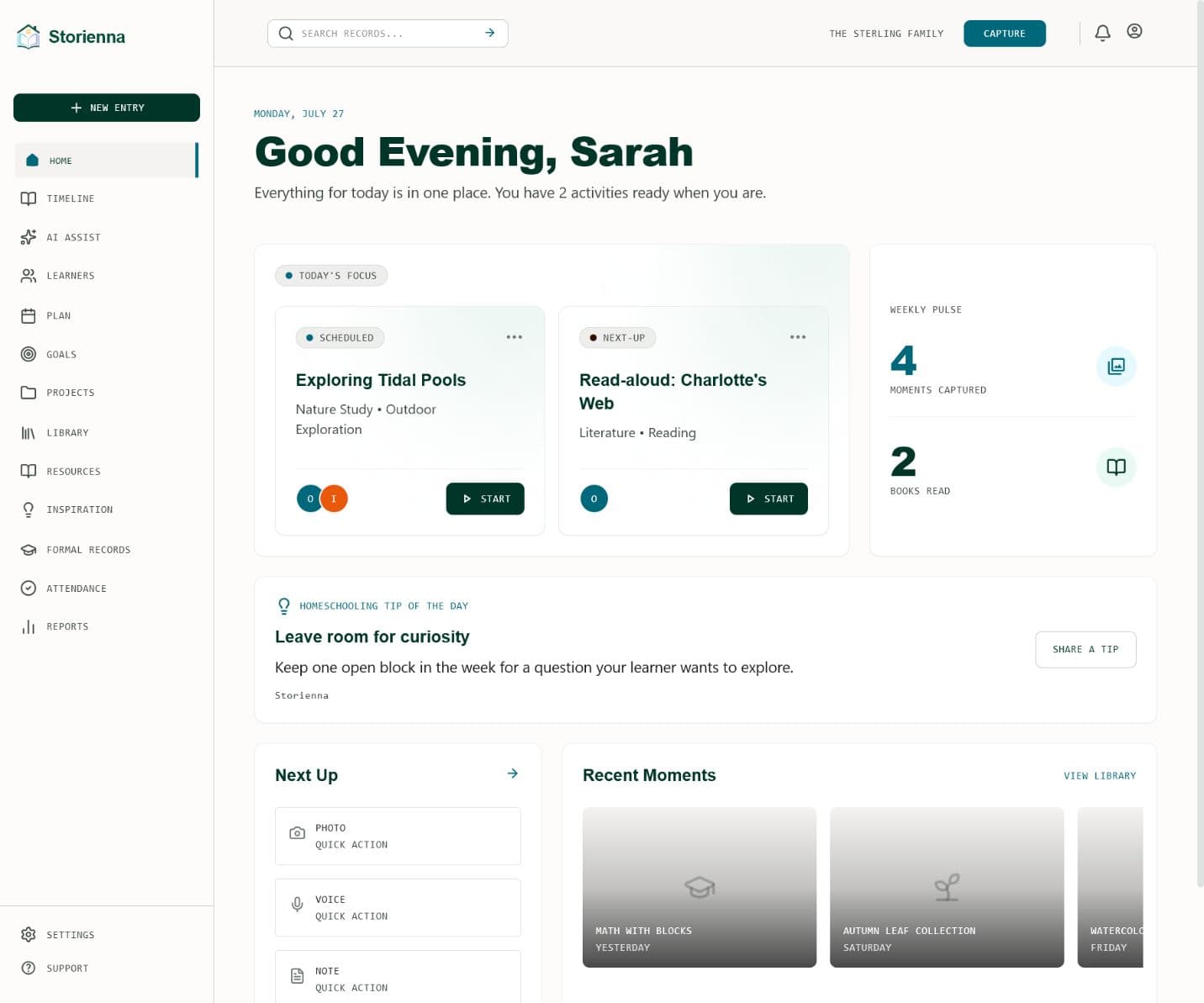
Daily plans, books, projects, notes, and completed learning can remain available when an adult prepares a family course record. This reduces last-minute reconstruction while keeping adult decisions explicit.
Choose a clear course title and the correct academic period.
Record scope, topics, resources, methods, and representative work.
Apply the configured grading or credit rule and record the adult decision.
Finalize a course snapshot that stays aligned with later reports and exports.
Storianna does not decide that a course is honors-level, award credit, invent assessment evidence, or guarantee acceptance by a school or institution. AI may draft from selected confirmed evidence, but an authorized adult approves every family-record field and result.
Storianna helps organize family learning records. It does not provide legal advice or guarantee that a record will satisfy a particular authority.
PrivacyA concise description commonly includes the course title and period, overview and major topics, primary materials, instructional method, representative work or assessments, and any grade, level, or credit explanation that the adult can support.
There is no universal length. A focused paragraph is often enough for a conventional course; a distinctive project-based or interdisciplinary course may need more context. Follow the receiving institution’s current instructions when they specify a format.
No. Grades and credits use deterministic household-configured rules or an explicit adult decision. AI may help summarize selected evidence, but it cannot award a grade, designate rigor, or finalize the course record.
Keep homeschool learning logs, photos, attendance, reports, and course records connected in one private, adult-reviewed system.
Create an adult-reviewed homeschool progress report from dated learning logs, representative work, projects, reading, attendance, and reflections without rewriting the term from memory.
Collect homeschool work samples, photos, reflections, projects, and progress over time, then curate a private digital portfolio for review or export.
Track homeschool attendance, learning days, and optional hours for multiple learners without treating missed app activity as an absence or a legal conclusion.
Create a free household workspace, add only the learners and information you choose, and upgrade later only if the added capacity or advanced records are valuable to you.